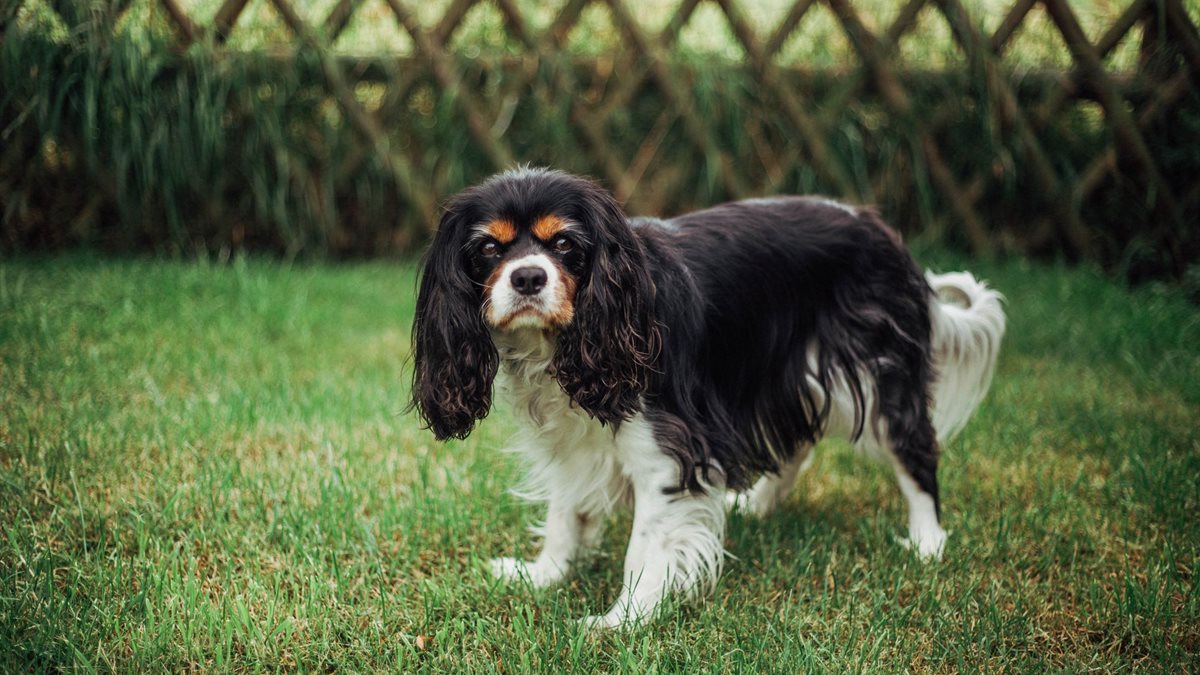
In this guide
Health conditions Cavalier King Charles Spaniels are prone to
Cavaliers break the rule that small dogs are cheap to cover. PetSure's 2025 report places them fifth on the list of highest claiming Australian breeds at an average $1,259 a year, against $1,047 across all dogs, in company otherwise made up of French Bulldogs, Beagles, Rottweilers and Miniature Schnauzers. The reason is that their two defining conditions are both chronic. Mitral valve disease affects close to the entire breed by age ten, and syringomyelia requires MRI to diagnose and often ongoing management afterwards. Neither is a single event you claim for once.
| Condition | Typical cost | Notes |
|---|---|---|
| Mitral valve disease | $5,000 to $20,000 over a lifetime | Close to universal by age ten, begins as a murmur and progresses to heart failure |
| Syringomyelia | $5,000 to $10,000 | MRI required to diagnose, may need ongoing pain management or surgery |
| Patellar luxation | $3,000 to $5,000 per knee | Common in small breeds, surgical at higher grades |
| Hip dysplasia | $5,000 to $10,000 | Higher incidence than the breed's size suggests |
| Ear infections | $300 to $900 per episode | Long drop ears, frequently recurrent |
| Dry eye (keratoconjunctivitis sicca) | $500 to $1,500 per year | Lifelong lubricant and medication once established |
| Dental disease | $800 to $2,000 per procedure | Small crowded jaw, rarely covered without a dental add-on |
What insurance costs for a Cavalier King Charles Spaniel
Canstar's 2025 comparison does not name the Cavalier separately, but puts small dogs generally at an average $1,316 a year against a $1,359 market average across all sizes. Given the breed's claims profile sits well above average, expect quotes towards or beyond the upper end of the small dog range rather than the middle of it.
| Age | Typical monthly premium |
|---|---|
| Puppy, under 1 year | $55 to $80 |
| 2 to 4 years | $80 to $110 |
| 5 to 7 years | $110 to $155 |
| 8 years and over | $155 to $225 |
Policy terms that affect claims for this breed
Three parts of a PDS have more bearing on what a Cavalier King Charles Spaniel claim pays than the headline premium does. What follows describes how those terms operate. It is not a recommendation to buy or hold any particular policy.
1. How sub-limits on cardiac and neurological conditions work
Cardiac sub-limits have the most effect for this breed. The main condition is managed rather than cured, so costs arrive in instalments across years rather than as a single bill. Any per-condition annual cap is reached at some point in that sequence, after which the premium continues but that condition is no longer reimbursed.
2. How waiting periods apply
The standard 30 day illness wait applies. Heart murmurs in Cavaliers are commonly detected at routine puppy vaccination appointments, sometimes at the first. A murmur recorded before cover starts makes cardiac disease pre-existing from that point on.
3. How exclusions are defined
Syringomyelia cannot be diagnosed without MRI, and some policies restrict advanced imaging or cap it separately. Insurers also differ in whether mitral valve disease is treated as an illness or as a hereditary condition, which the breed's near-universal incidence makes material.
How three providers compare
Policy features relevant to the conditions described above, as published by each insurer. This is a factual comparison, not a ranking or a recommendation.
| Provider | Relevant policy feature | Annual limit |
|---|---|---|
| Knose | No sub-limits, so cardiac management is constrained only by the annual limit | Up to $20,000 |
| Pet Insurance Australia | Highest annual limit of the three | Up to $25,000 |
| Bow Wow Meow | Hereditary conditions defined explicitly in the PDS | Up to $15,000 |
Common questions
Summary
Cavaliers claim more than almost any breed in Australia, at an average $1,259 a year against $1,047 across all dogs, which is unusual for a small dog. Both defining conditions are chronic rather than one-off, so per-condition annual caps bind repeatedly rather than once. Murmurs are frequently detected at the first vaccination appointment, which is earlier than the point at which most owners arrange cover.
Condition costs are indicative ranges compiled from Australian veterinary pricing sources. Premium figures are published averages, sourced on each page. Policy features are as published by each insurer and current at July 2026; verify against the current PDS before relying on them.