In this guide
Health conditions Staffordshire Bull Terriers are prone to
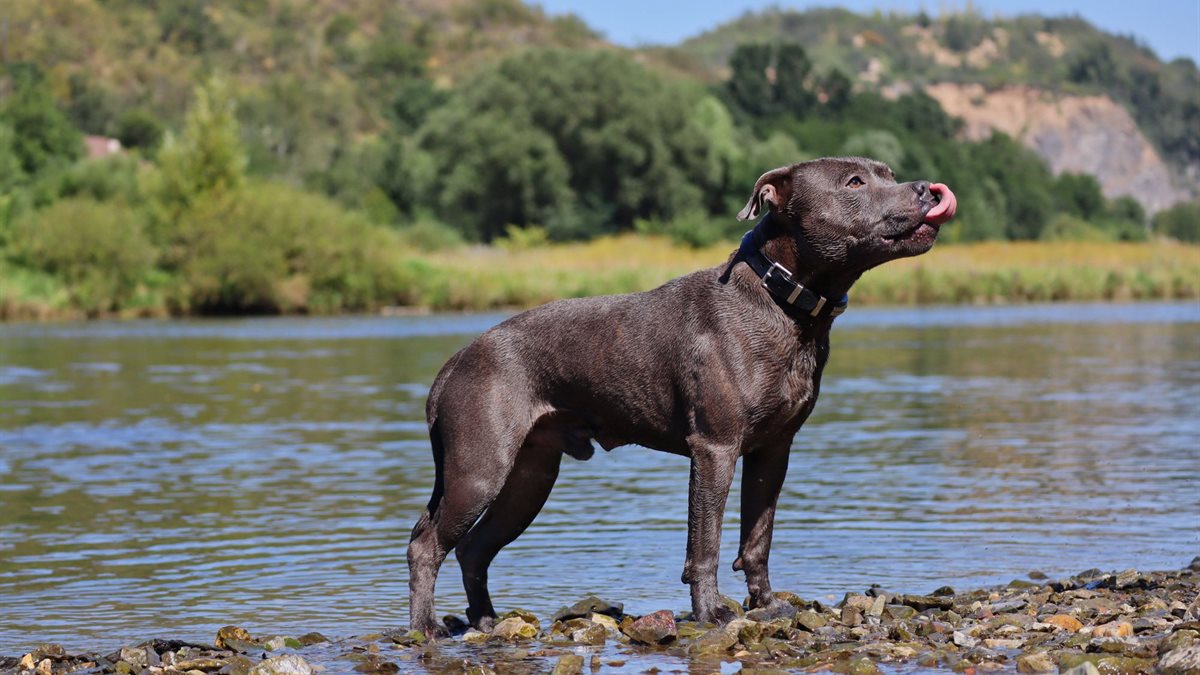
PetSure's 2025 report names skin conditions as the single most common reason Australian dogs present to a vet, ahead of gastrointestinal problems and ear infections. Staffordshire Bull Terriers sit near the top of that list, and the pattern is specific: atopic dermatitis typically shows its first signs between one and three years of age, then continues for the rest of the dog's life. That timing matters enormously, because it means the condition usually appears just after the point most owners have decided their dog is healthy and started shopping on price.
| Condition | Typical cost | Notes |
|---|---|---|
| Atopic dermatitis | $1,500 to $3,000 per year ongoing | First signs usually between one and three years old, lifelong once established |
| Cruciate ligament rupture | $4,000 to $7,000 per knee | Muscular build and high activity, frequently affects both knees over time |
| Mast cell tumours | $3,000 to $8,000 | Elevated incidence, surgical removal plus histopathology |
| Hereditary cataracts | $3,000 to $5,000 per eye | Inherited, DNA test available for breeding stock |
| L-2-hydroxyglutaric aciduria | $1,000 to $3,000 to diagnose | Breed-specific metabolic disorder, DNA testable |
| Demodectic mange | $600 to $1,800 | More common in young dogs with immune immaturity |
| Hip dysplasia | $5,000 to $12,000 | Lower incidence than in large breeds but not absent |
What insurance costs for a Staffordshire Bull Terrier
Staffies sit near the market average. Canstar's 2025 comparison does not name the Staffordshire Bull Terrier separately, but lists the closest published equivalent, American Staffordshire Terrier cross, at $1,304 a year against a $1,359 market average. Treat that as indicative rather than exact, since the breeds are related but distinct.
| Age | Typical monthly premium |
|---|---|
| Puppy, under 1 year | $55 to $75 |
| 2 to 4 years | $75 to $105 |
| 5 to 7 years | $105 to $145 |
| 8 years and over | $145 to $205 |
Policy terms that affect claims for this breed
Three parts of a PDS have more bearing on what a Staffordshire Bull Terrier claim pays than the headline premium does. What follows describes how those terms operate. It is not a recommendation to buy or hold any particular policy.
1. How sub-limits on skin and dermatological conditions work
The dermatology or skin condition sub-limit affects the outcome more than the annual limit does for this breed. A $20,000 annual limit with a $1,500 skin cap reimburses less over time than a $12,000 limit with no caps, because skin conditions recur annually rather than resolving.
2. How waiting periods apply
The standard 30 day illness wait applies to skin conditions. Atopic dermatitis commonly first appears between one and three years of age. Signs recorded before cover starts are treated as pre-existing, and remain so with any subsequent insurer.
3. How exclusions are defined
Allergy testing and immunotherapy are covered by some policies and treated as excluded diagnostics by others. Insurers also differ in whether each flare-up of a chronic skin condition is treated as a new claim or a continuation of one, which interacts with per-condition caps.
How three providers compare
Policy features relevant to the conditions described above, as published by each insurer. This is a factual comparison, not a ranking or a recommendation.
| Provider | Relevant policy feature | Annual limit |
|---|---|---|
| Knose | No sub-limits, including on dermatology | Up to $20,000 |
| Bow Wow Meow | Chronic and recurring condition terms set out explicitly in the PDS | Up to $15,000 |
| Pet Insurance Australia | Highest annual limit of the three | Up to $25,000 |
Common questions
Summary
Skin conditions are the most common reason Australian dogs present to a vet, and Staffordshire Bull Terriers are among the breeds most affected. The typical claim pattern is not one large surgery but $1,500 to $3,000 a year of ongoing management across many years, which is the pattern most constrained by dermatology sub-limits. Onset commonly falls between one and three years of age, before which the condition is not pre-existing.
Condition costs are indicative ranges compiled from Australian veterinary pricing sources. Premium figures are published averages, sourced on each page. Policy features are as published by each insurer and current at July 2026; verify against the current PDS before relying on them.